Why Broken Cables Ruin Your Entire Headset & How to Avoid It
2026-07-31
For security staff, emergency responders and field workers, communication noise-cancelling headsets are essential on-site equipment. Yet most headset failures stem from one common issue: damaged cables. In traditional integrated-wire headsets, a single broken wire, cracked sheath, or loose internal circuit will render the entire headset useless. Users are forced to replace the whole device instead of just a small accessory, causing unnecessary equipment waste, higher operational costs, and unexpected communication downtime during critical tasks.
Practical Cable Maintenance Tips to Extend Headset Lifespan
Most cable damage is caused by improper daily use and storage. With standardized maintenance habits, teams can effectively reduce cable wear and avoid frequent failures:
- Avoid sharp bending and tensile pulling - The wire core inside the cable is fragile. Long-term tight folding, hard pulling, or squeezing during work will break the internal copper wire. Always coil the cable loosely with a figure-eight winding method instead of rigid circular folding, and never drag the headset by its cable.
- Keep cables clean, dry and corrosion-free - Field scenarios often involve sweat, dust, rain and humid environments. Residual sweat and moisture will corrode cable joints and accelerate sheath aging. After daily use, wipe the cable surface with a dry soft cloth, remove dust and stains, and store the headset in a dry, ventilated place to avoid mildew and oxidation.
- Standardize storage to prevent extrusion and winding - Do not stuff the headset randomly into bags. Long-term extrusion and messy winding will cause fatigue damage to the cable. Use matched cable Velcro to organize wires and store the headset separately to reduce external pressure and friction.
- Regular inspection of vulnerable joints - The connection between cable and headset, as well as the cable and plug, is the most breakable part. Check these key positions regularly for sheath cracking and wire exposure, and fix minor wear in advance to prevent sudden failure during work.

The Ultimate Solution: Choose Noise-Cancelling Headsets with Detachable Plug-and-Play Cables
While daily maintenance can delay cable aging, it cannot completely avoid wear and tear from long-term high-intensity field use. For professional teams pursuing long-term cost efficiency and stable communication, noise-cancelling headsets with detachable cables are the fundamental solution to solve the pain point of “one cable failure, whole headset scrapped”.
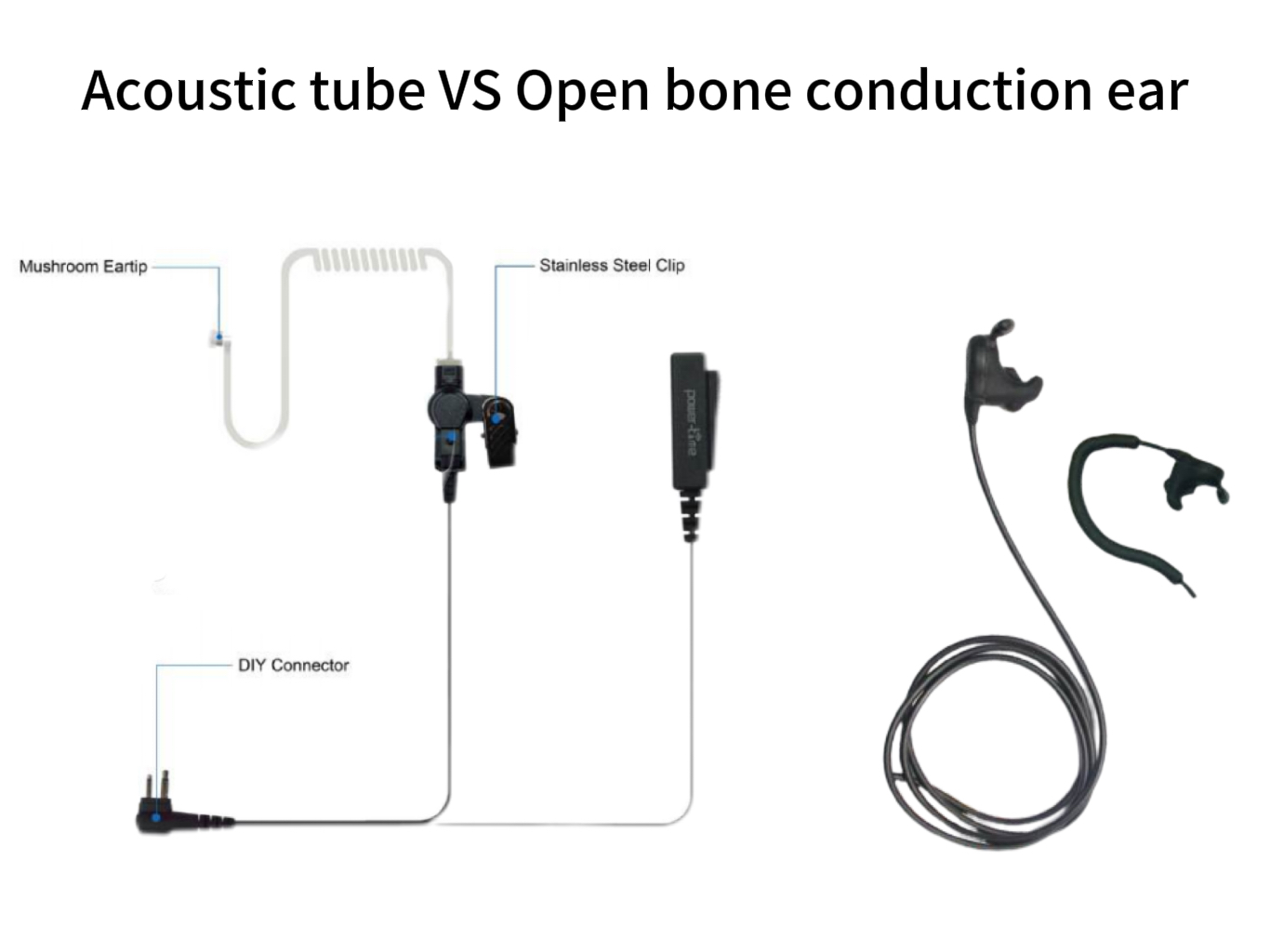
Different from traditional integrated wired headsets, Power-Time optimized noise-cancelling headsets adopt a mature plug-and-play detachable cable structure. The headset body and audio cable are designed independently. Once the cable is worn, broken or faulty after long-term use, users only need to replace a single cable instead of abandoning the entire headset. The headset shell, speakers, microphones and other core acoustic components can continue to work normally, greatly reducing equipment replacement costs and team operation expenses.
Tailored for harsh field working conditions, the detachable cable interface features stable locking connection, tight fit and anti-loosening performance. It maintains continuous and clear audio transmission even during strenuous movement, patrol and emergency disposal, with no disconnection or audio stuttering. Matching upgraded wear-resistant and tensile cables further enhance field adaptability.
Scientific daily maintenance can maximize the service life of headset cables, while choosing noise-cancelling headsets with detachable cables fundamentally solves the industry pain point of “one cable failure, whole headset scrapped”. For security, emergency rescue and large-scale event operation teams, it realizes flexible equipment management, lowers overall operating costs, and ensures stable and reliable on-site communication at all times.

OEM vs Aftermarket Radio Accessories
What Is a Covert Earpiece?
Related Article

Power‑Time PTE‑I5 earphone is an industrial‑grade Bluetooth headset built for front‑line workers in factories, warehouses, transport hubs and outdoor sites.
Reliable Hands‑Free Communication for Demanding Industrial Workplaces

A practical comparison of OEM and aftermarket radio accessories — examining compatibility, cost, quality, and reliability for professional buyers.
OEM vs Aftermarket Radio Accessories