OEM vs Aftermarket Radio Accessories
2026-08-11
Every procurement manager responsible for two-way radio communication has faced the same question: Should I buy OEM (Original Equipment Manufacturer) accessories or go with aftermarket alternatives? OEM accessories are manufactured by or for the original radio brand, carrying the brand's name and sold through official channels. Aftermarket accessories, by contrast, are produced by independent manufacturers, designed to work with leading radio brands but sold under their own brand.
The Strengths and Limitations of OEM
The primary advantage of OEM accessories lies in guaranteed compatibility — they are purpose-built for specific radio models, ensuring seamless fit, form, and function. OEM products undergo rigorous quality control processes, subject to the brand's internal testing standards and factory audits. They also come with official warranties backed by the brand's global service network.
However, OEM pricing is significantly higher — often two to three times that of comparable aftermarket alternatives. Purchasing is restricted to brand-authorized channels and the lead times can be unpredictable. Additionally, OEM support for older or discontinued radio models is often limited or unavailable, forcing users with legacy equipment to seek alternative solutions.
The Strengths and Limitations of the Aftermarket
Aftermarket accessories offer compelling advantages for many professional users. Cost is the most obvious benefit — aftermarket products are typically more affordable, delivering significant savings for large-scale deployments. Product variety is another strength: aftermarket suppliers often offer a broader range of options to suit specific operational needs. Brand flexibility is also a key advantage: a single supplier can provide compatible accessories for multiple radio brands (e.g., Motorola, Hytera, Kenwood, Icom).
However, compatibility is not always guaranteed — some accessories may not achieve the same precision fit or electrical performance as OEM equivalents. Certain proprietary technologies may remain exclusive to OEM brands. Quality consistency is another concern: the aftermarket spans a wide spectrum, from reliable professional-grade manufacturers to low-cost vendors. Without careful evaluation, buyers risk receiving products that underperform or fail prematurely.
How to Identify a Reliable Aftermarket Supplier
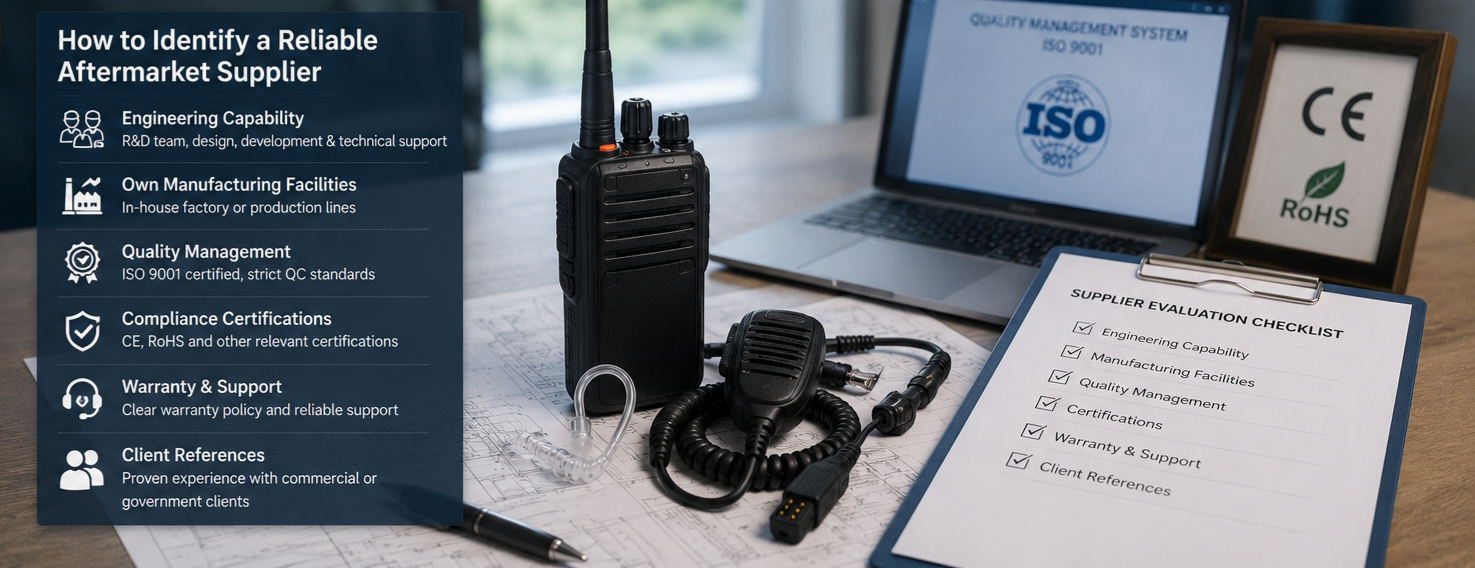
Given the quality inconsistency in the aftermarket, selecting a trustworthy partner requires careful evaluation. Look for:
Given the quality inconsistency in the aftermarket, selecting a trustworthy partner requires careful evaluation. Look for:
- Engineering capability – Does the supplier have an R&D team that provides design, development, and technical support?
- Own manufacturing facilities – Does the supplier operate their own factory or production lines?
- Quality management – Are they ISO 9001 certified? Do they implement strict quality control standards?
- Compliance certifications – Can they provide relevant product certifications such as CE or RoHS?
- Warranty and support – Do they back their products with a clear warranty policy?
- Client references – Do they serve known commercial or government clients?
The OEM vs aftermarket decision depends on your operational context, budget, and equipment lifecycle. For organizations with strict compatibility requirements or the budget flexibility to prioritize brand assurance, OEM remains the gold standard. For those working with tighter budgets, managing large-scale deployments, seeking newer or more varied accessory options, or operating mixed-brand environments, a professional-grade aftermarket supplier can offer a practical and cost-effective alternative.
With over 20 years of experience, Power-Time combines an experienced engineering team, in-house production lines, ISO-certified quality management, and comprehensive compliance testing to deliver professional-grade aftermarket accessories. Contact Power-Time for more details if you’re searching for a reliable aftermarket accessories supplier.
Reliable Hands‑Free Communication for Demanding Industrial Workplaces
Why Broken Cables Ruin Your Entire Headset & How to Avoid It
Related Article

Power‑Time PTE‑I5 earphone is an industrial‑grade Bluetooth headset built for front‑line workers in factories, warehouses, transport hubs and outdoor sites.
Reliable Hands‑Free Communication for Demanding Industrial Workplaces
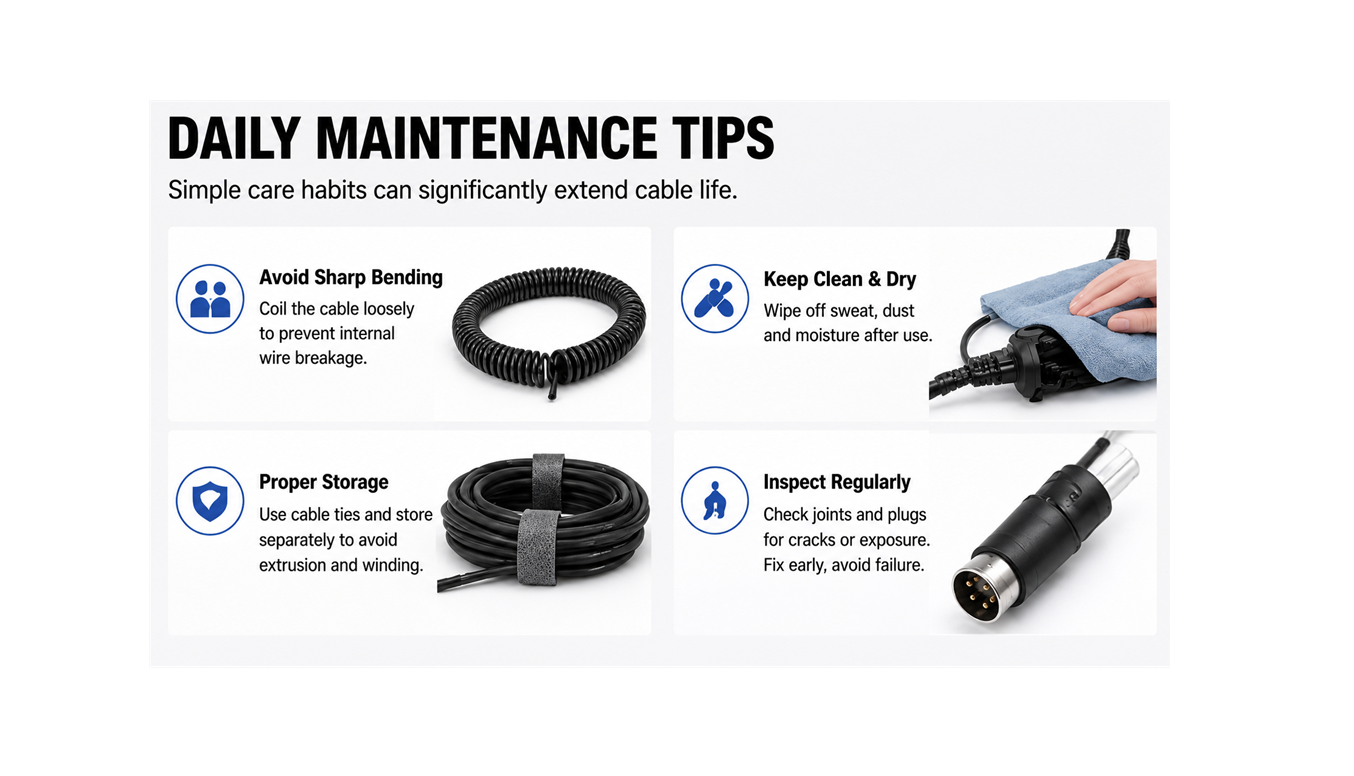
Many noise-canceling communication headphones are scrapped entirely due to broken cables! We share headphone cable maintenance tips to reduce equipment maintenance and operational costs for security and emergency response teams.
Why Broken Cables Ruin Your Entire Headset & How to Avoid It